Your Feet Called — and a Dermatologist Picked Up: The Summer Skin Case for Yeezy Slides
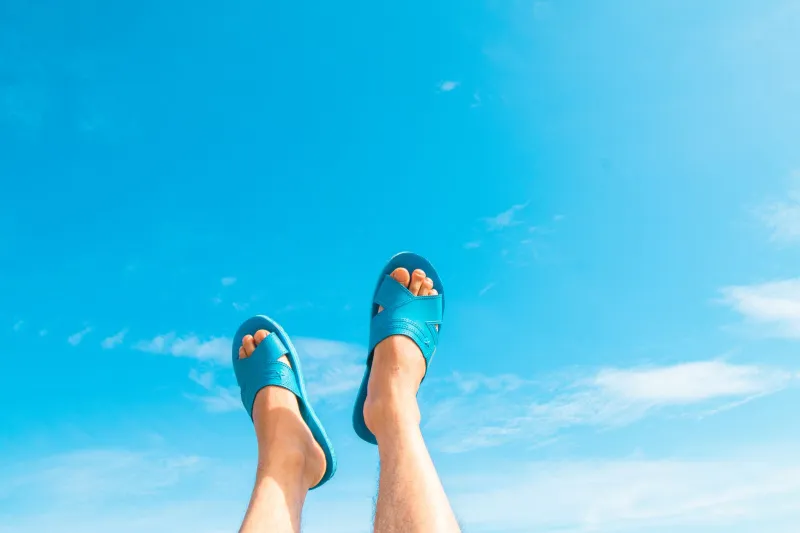
For most people, picking up a pair of Yeezy Slides starts with a vibe check — the colorway, the fit, the way they look sliding out of a car on a hot Saturday. What almost nobody expects is to hear their dermatologist co-sign the decision. But that's quietly becoming a thing.
Skin specialists across the country are starting to talk about open-toe, low-profile footwear in a new way — not just as a fashion choice, but as a functional one. And Yeezy Slides, with their sculpted foam build and zero-frills design, keep coming up in that conversation.
The Hidden Skin Problem Hiding Inside Your Sneakers
Here's something most people don't think about: your feet are one of the most sweat-dense areas of your entire body. Each foot has roughly 250,000 sweat glands. During a summer day in places like Atlanta, Houston, or Miami — where humidity turns sidewalks into saunas — those glands are working overtime.
When you pair that level of moisture output with a closed-toe sneaker, a synthetic lining, and limited airflow, you create what dermatologists call a "maceration environment." Translation: your skin stays damp, softens, and becomes vulnerable. That's the setup for athlete's foot, bacterial infections, blisters, and the kind of chronic foot odor that no amount of Gold Bond is fixing.
"Moisture is the enemy of healthy foot skin," explains one board-certified dermatologist based in Los Angeles who treats a high volume of summer-related foot conditions. "Anything that keeps the foot drier and cooler is going to reduce the risk of fungal overgrowth and skin breakdown. Open footwear does that naturally."
Why Foam Actually Works in Your Favor
Yeezy Slides are built from a single piece of EVA foam — that's ethylene-vinyl acetate, the same lightweight material used in performance running midsoles. It's non-porous in a way that synthetic fabric liners aren't, meaning it doesn't absorb and hold moisture against your skin the way the inside of a traditional sneaker does.
When you step out of a pool, walk across a beach, or just sweat through a long afternoon, the slide's surface dries fast. There's no fabric layer trapping heat and bacteria. That might sound like a small detail, but from a dermatological standpoint, it changes the whole equation.
Dermatologists also point to the absence of tight straps or constrictive toe boxes as a meaningful factor. Pressure points created by ill-fitting shoes can cause skin breakdown, ingrown nails, and callus buildup. The wide, open silhouette of Yeezy Slides sidesteps most of those issues entirely.
Fungal Infections Are More Common Than You Think
Athlete's foot — clinically known as tinea pedis — affects an estimated 15 to 25 percent of the population at any given time, according to the American Academy of Dermatology. It thrives in warm, moist environments. Summer is its season.
The fungus responsible spreads easily in shared spaces: gym locker rooms, public pools, hotel hallways. Most people grab their flip-flops for those situations without thinking much about it. But dermatologists note that not all open footwear is created equal when it comes to actual protection and post-exposure recovery.
"After exposure to a potentially contaminated surface, what matters next is how quickly your foot dries and how little irritation occurs," says a dermatologist who practices in New York City. "A well-constructed slide that allows airflow and dries quickly gives your skin's natural defenses a better chance to do their job."
The contoured footbed of the Yeezy Slide — which cradles the arch and distributes weight evenly — also reduces friction-related skin stress, which can create entry points for infection when skin is already compromised by heat and moisture.
Heat Rash, Hyperhidrosis, and the Ventilation Factor
Two other summer skin conditions that dermatologists see spike every year: heat rash (miliaria) and hyperhidrosis-related complications. Both are directly tied to trapped heat and blocked sweat glands.
Heat rash typically shows up when sweat ducts get clogged and sweat can't escape properly. On the feet, this usually happens between toes and along the heel — exactly where closed shoes and tight socks create the most contact. Open slides eliminate that contact zone almost entirely.
For people who deal with hyperhidrosis — excessive sweating that goes beyond what most people experience — foot-forward footwear choices aren't just a comfort preference, they're a management strategy. Several dermatologists interviewed for this piece said they routinely advise hyperhidrosis patients to prioritize ventilated footwear during warmer months, and that minimalist slides are frequently part of that recommendation.
The Styling Angle Isn't Going Anywhere
None of this means you have to choose between looking good and taking care of your skin. That's kind of the whole point of where Yeezy Slides have landed culturally — they've collapsed the gap between aesthetics and function in a way that feels effortless.
The current colorway lineup spans everything from neutral tones like Bone and Pure to bolder seasonal drops, which means you're not sacrificing your fit to make a healthier footwear call. You can rock them with a linen set on a rooftop, pair them with sweats for a morning coffee run, or keep them by the door for everything in between.
The fact that dermatologists are now part of the conversation around slides like these? That's just extra validation for a shoe that was already earning its place in the rotation.
What to Keep in Mind
Dermatologists are quick to clarify that slides aren't a cure-all. If you're already dealing with an active fungal infection, you still need antifungal treatment — footwear alone won't clear it up. And for people with diabetes or circulation issues, any footwear decision should go through a healthcare provider first, since those conditions require more specific foot protection.
But for the average person looking to keep their feet healthier through a hot American summer? The case for open, breathable, low-friction footwear is real — and it's being made by people with medical degrees, not just style credibility.
That's a combo that doesn't come around very often. Might as well step into it.