One Shoe, Every Tribe: How Yeezy Slides Became America's Great Equalizer
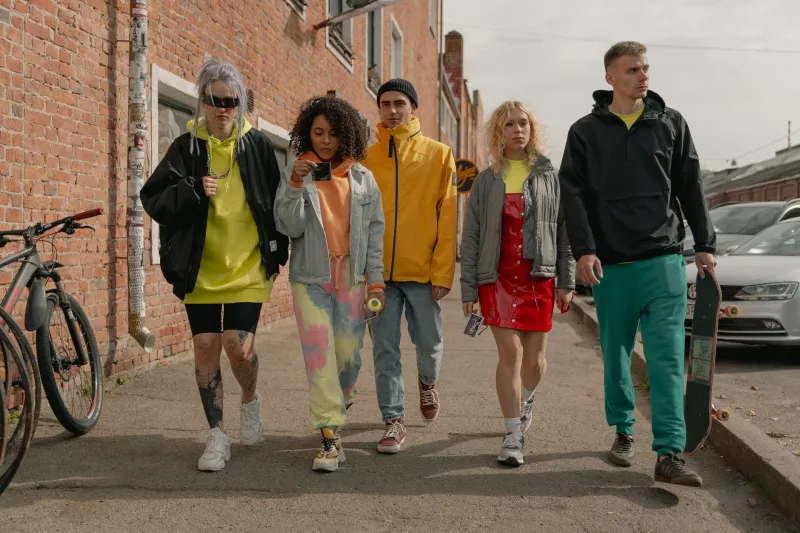
American sneaker culture has always been tribal. What you wear on your feet signals where you're from, what you're into, and who you're rolling with. Air Force 1s belong to certain corners. Dunks belong to others. Timberlands, New Balances, Jordans — each has its territory, its people, its unspoken rules. And then there are Yeezy Slides, which somehow belong to everyone.
That's not an exaggeration. Pull up at a skate park in Los Angeles, a tech campus in Austin, a family reunion in Atlanta, or a corner bodega in the Bronx, and you'll find them. The same foam silhouette. Different people, different lives, same shoe. How does that happen? And what does it say about where American culture is right now?
The Exclusivity Paradox
Here's the thing that makes Yeezy Slides genuinely fascinating from a cultural standpoint: they launched into the market as a premium, limited-availability product. The Yeezy brand carried serious cachet — Kanye West's creative fingerprint, Adidas's manufacturing muscle, and a hype ecosystem that made drops feel like events. On paper, this was a shoe for sneakerheads, for people plugged into the culture, for those willing to pay resale premiums.
But foam doesn't care about your zip code. And neither, apparently, does the silhouette.
As availability expanded and colorways multiplied, something unexpected happened: Yeezy Slides slipped out of the exclusive lane and into something much broader. The price point — lower than most Yeezy sneakers — made them accessible to buyers who'd never camp out for a drop. The design, stripped of logos and branding flourishes, meant they didn't scream hype to people outside that world. They just looked clean. Minimal. Easy.
The exclusivity paradox: a shoe born from hype culture became the footwear that transcends it.
What Skaters Saw in the Slide
Skate culture's relationship with footwear is notoriously specific. Skaters need grip, durability, board feel — and they're famously allergic to anything that reads as try-hard. So it's interesting that Yeezy Slides found their way into skate circles not as a skating shoe, but as the shoe you put on after you skate.
The recovery shoe. The hang-around shoe. The shoe you wear when you're filming your homie's line and you're not the one on the board right now.
In this context, Yeezy Slides became part of the skate aesthetic by association rather than function. They showed up in skate videos as B-roll footwear. They appeared in the parking lot, on the curb, in the clips where everyone's just vibing between runs. And because skate culture has enormous influence on streetwear and youth fashion broadly, that association mattered.
The Corporate Casual Crossover
Meanwhile, on the other end of the cultural spectrum, something equally interesting was happening. The pandemic-era collapse of dress codes — the mass migration to remote work, the normalization of athleisure in professional settings — created an opening for comfort-forward footwear in spaces that would have rejected it five years earlier.
Yeezy Slides walked right through that door.
Tech workers in San Francisco and Seattle started wearing them to the office on casual Fridays, then on regular Tuesdays, then basically whenever. The minimal, design-forward aesthetic gave them just enough sophistication to pass muster in environments where flip-flops would've raised eyebrows. The comfort was undeniable for people logging long hours at standing desks or walking between buildings on sprawling campuses.
This wasn't a calculated brand strategy. It was organic adoption driven by the slide's ability to read differently to different audiences. A skater sees effortless cool. A tech worker sees intelligent design. A parent at a weekend soccer game sees practical comfort. The shoe doesn't argue with any of these interpretations — it just shows up and lets people project what they need onto it.
Regional Fluency
One of the most underappreciated aspects of Yeezy Slides' cultural reach is how well they travel geographically. American regional fashion identities are real and distinct — what flies in Miami doesn't always translate to Chicago, and New York's relationship with footwear is its own universe compared to, say, Phoenix or Nashville.
But Yeezy Slides seem to have figured out the code in every market.
In Miami, they fit the warm-weather, beach-adjacent lifestyle where slides are practically the default shoe anyway. The elevated design just makes them the premium version of what everyone's already wearing. In New York, they carry streetwear credibility while being practical enough for the city's relentless walking culture. In the South, they've become a cookout and barbecue staple — easy to slip off, comfortable for hours on your feet, and clean enough to look like you made an effort.
The colorway strategy also plays a role here. The range of available shades — from bold earth tones to muted neutrals to stark monochromes — means that different regional aesthetics can find their version of the slide without compromising the silhouette's integrity.
Generational Overlap Is Rare. This Is Real.
Most footwear trends are generationally sticky. Gen Z has their thing. Millennials have their thing. Boomers definitely have their thing, and it rarely overlaps with the other two. Yeezy Slides are genuinely unusual in that they've achieved meaningful traction across multiple age cohorts simultaneously.
Gen Z gravitates toward them for the comfort-as-status ethos — the idea that being too cool to try too hard is the highest form of style. Millennials appreciate the design pedigree and the nostalgia-adjacent feeling of a shoe that feels like it was made for a simpler, less complicated relationship with getting dressed. And older consumers, including parents who stumbled onto them at retailers, often just report that they're the most comfortable thing they've ever put on their feet.
Three different reasons. Same shoe.
The Common Ground We Didn't Know We Needed
In a cultural moment defined by fragmentation — where algorithms keep us in our lanes and tribal identities feel more rigid than ever — there's something quietly meaningful about a single object that keeps showing up across all the divides. Yeezy Slides aren't going to solve anything. They're shoes. But they're a useful reminder that common ground is still findable when the thing doing the connecting is honest enough, well-designed enough, and unpretentious enough to let different people see themselves in it.
That's not a small thing in sneaker culture. That's actually everything.