Your Slides, Your Rules: Inside the Booming World of Yeezy Slide Customization
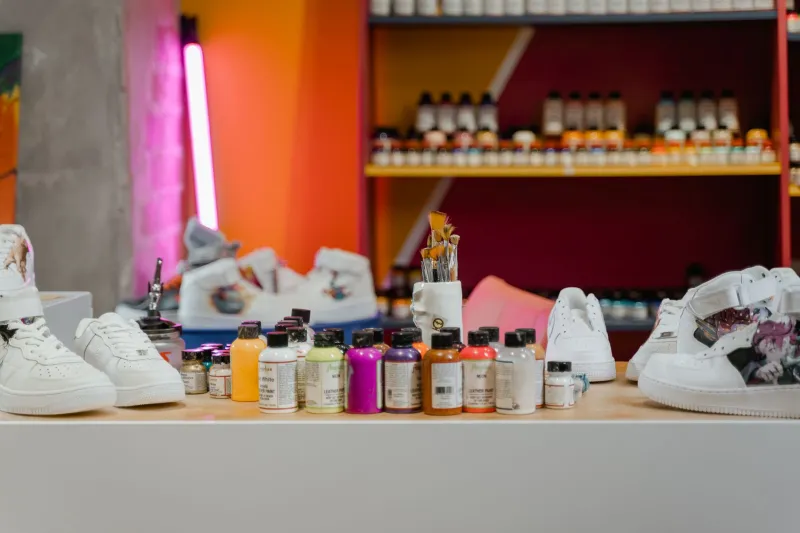
Walk through any major sneaker convention right now and you'll spot them immediately — Yeezy Slides that don't look like anything Adidas ever put in a box. Marbled in jewel tones. Hand-stitched with floral patterns. Airbrushed with portraits. Dipped in chrome. The foam silhouette is instantly recognizable, but everything else is entirely someone else's vision.
This is custom culture, and right now it's having a serious moment.
The Yeezy Slide has become the unofficial canvas of a generation of sneaker artists who are less interested in what a brand says their shoe should be and a lot more interested in what they can make it become. And the results — wild, personal, occasionally jaw-dropping — are reshaping the conversation around what sneaker ownership even means.
Why the Yeezy Slide Became the Go-To Canvas
Customizers don't choose their canvases randomly. There's a reason Yeezy Slides have become so dominant in the DIY space, and it comes down to the material itself.
The EVA foam construction that makes these slides so comfortable also happens to take paint, dye, and texture work remarkably well. Unlike leather sneakers, which require extensive prep and can crack over time, foam absorbs certain mediums in ways that create almost unpredictable, organic results. Dye spreads. Layers build. The texture of the sole gives brushwork a tactile quality you just don't get on a flat canvas.
"The foam is alive in a way," says Marcus Delray, a Brooklyn-based customizer who goes by the handle @DelrayMakes on Instagram and has a waitlist that stretches six months. "It reacts. You put color on it and it does something unexpected. That's exciting to work with."
Beyond the material, there's the silhouette. The Yeezy Slide's clean, minimal design is essentially a blank template — no busy stitching, no complicated panels, no logos screaming for attention. It's a shape that invites intervention.
The Techniques Taking Over
The customization methods being applied to Yeezy Slides right now range from beginner-accessible to genuinely technically demanding. Here's a quick breakdown of what's popping in the community:
Hand Painting is the most common entry point. Using flexible acrylic paints designed for footwear (brands like Angelus are staples in the community), artists build up layers of color directly on the foam. Everything from geometric patterns to photorealistic portraits is fair game.
Fabric Dye and Tie-Dye techniques create those swirling, unpredictable color blends that look almost impossible to replicate. Because the foam absorbs dye differently than fabric, the results have a unique quality that's become its own aesthetic.
Embroidery and Textile Additions are pushing things in a more tactile direction. Some customizers are stitching directly into the foam or attaching fabric panels, mixing materials in ways that blur the line between footwear and wearable art.
Mixed Media is where things get genuinely experimental — think resin pours, pressed flowers sealed under clear coating, miniature sculptural elements attached to the strap. These pieces are less about wearability and more about the object itself.
Jasmine Obi, a Houston-based artist who transitioned from fine art into sneaker customization, says she approaches each Yeezy Slide the way she'd approach a small sculpture. "I'm not decorating a shoe. I'm making something. The shoe is just the starting point."
What the Market Is Saying
Custom Yeezy Slides aren't cheap. Depending on the complexity of the work and the reputation of the artist, a commissioned pair can run anywhere from $150 to well over $1,000 — sometimes multiple times the retail price of the original slide.
And people are paying it.
Platforms like Etsy, Depop, and Instagram have created direct pipelines between customizers and buyers, cutting out any middleman and letting artists build genuine followings around their work. Some of the most respected names in the custom space have turned what started as a side project into a full-time business.
The resale market has taken notice too. Rare custom pieces from well-known artists are showing up on StockX and GOAT alongside standard retail releases — a sign that the sneaker community has fully legitimized custom work as a category worth investing in.
A Pushback Against the Machine
There's something bigger going on here than just aesthetics. The explosion of Yeezy Slide customization is, at least in part, a response to something that's been building in sneaker culture for years: a growing frustration with hype cycles, limited drops, and the sense that brands — not consumers — control the narrative.
When you customize your slides, you're opting out of that system. You're saying the factory version is a starting point, not a finish line. You're asserting that your relationship with the object matters more than whatever story the brand wants to tell about it.
Dr. Keisha Fontaine, a cultural studies professor at Howard University who researches material culture and identity, frames it this way: "Customization is a reclamation. You're taking a mass-produced object and making it singular. In a culture that's drowning in identical things, that act carries real meaning."
There's also a community dimension that's hard to overstate. The customization space is genuinely collaborative — tutorials flow freely on YouTube and TikTok, Discord servers share technique breakdowns, and established artists regularly mentor newcomers. It operates on a fundamentally different logic than the competitive, gatekept world of sneaker resale.
The Tension With the Brand
It's worth acknowledging the elephant in the room: customization exists in a legally gray area. Technically, selling customized versions of branded products raises intellectual property questions that brands have occasionally pushed back on.
For now, Adidas has largely left the custom community alone, and most customizers are careful to navigate the space responsibly — disclosing that pieces are one-of-a-kind customs rather than official products, for example. The community largely polices itself on this front.
But the broader tension is real: a brand like Adidas has spent enormous resources building the Yeezy aesthetic, and the custom community is, in some ways, constantly reinterpreting that aesthetic without permission. Whether that's a threat or a form of flattery probably depends on who you ask.
What Comes Next
If current momentum is any guide, the custom Yeezy Slide space is only going to get more sophisticated. Artists are already experimenting with techniques borrowed from fine art, ceramics, and textile design. Collaborations between customizers and mainstream brands — once unthinkable — are starting to happen in adjacent spaces, suggesting the line between "underground" and "official" is blurring.
For Marcus Delray, that's both exciting and slightly bittersweet. "I love that more people are doing this. But part of what makes it special is that it's yours, you know? It's not a drop. It's not a collab. It's just — someone made this for you, and there's nothing else like it."
In a sneaker world that often feels like it's all about acquisition, that's a genuinely refreshing place to land.