Why Yeezy Slides Are Always Sold Out: A Look at the Supply Chain Behind the Scarcity
Why Yeezy Slides Always Sold Out: A Look at the Supply Chain Behind the Scarcity
If you've ever tried to buy Yeezy Slides at retail price and come up empty-handed, you're in very good company. The experience is almost a rite of passage at this point — you find the colorway you want, you set a reminder for the drop, you refresh the page at exactly the right time, and somehow they're still gone before you can check out. It feels personal. It isn't. It's structural.
The scarcity around Yeezy Slides isn't a fluke or a supply chain hiccup. It's the product of a very specific set of decisions made at the manufacturing, distribution, and brand strategy levels — decisions that have collectively turned a $70 foam sandal into one of the most consistently in-demand pieces in contemporary sneaker culture. Let's break down how it actually works.
The Manufacturing Reality: Foam Isn't as Simple as It Looks
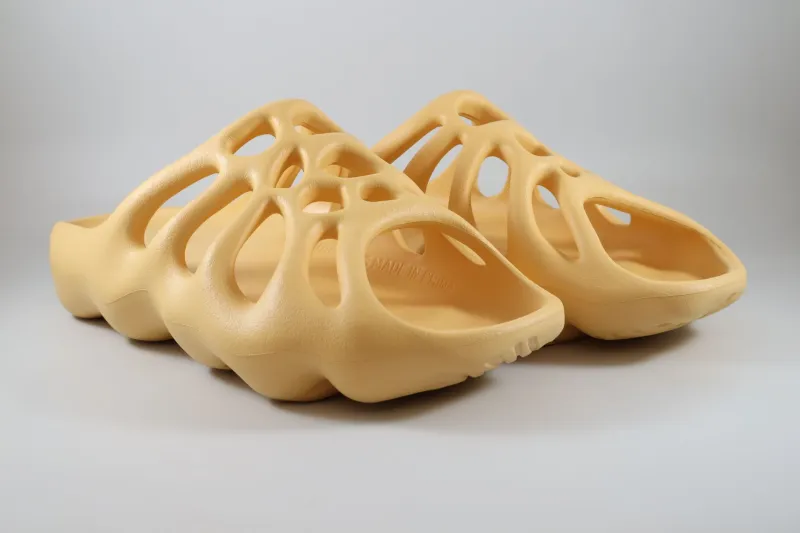
Yeezy Slides are made from a material called EVA foam — ethylene-vinyl acetate — which is lightweight, durable, and moldable. But manufacturing them at scale isn't as straightforward as the minimalist design might suggest.
Each slide is essentially a single-piece injection-molded unit. That process requires specialized equipment, specific mold tooling, and quality control at every stage to ensure the texture, density, and structural integrity hold up. The molds themselves are expensive to produce and maintain, and changing colorways requires reconfiguring the process. This isn't like printing a new color on a T-shirt.
Adidas produces Yeezy Slides primarily through manufacturing partners in China, where the bulk of global footwear production happens. But production capacity isn't infinite, and Yeezy Slides share factory floor space and resources with dozens of other products. When demand spikes — which it does constantly — the pipeline can't simply scale up overnight.
This creates a built-in lag between when demand peaks and when supply can realistically respond. By the time more inventory would be ready, the cultural moment has moved on, prices on the resale market have already climbed, and the next drop becomes the new focus.
Distribution Strategy: Scarcity by Design
Here's where things get more intentional. Adidas and the Yeezy brand have historically used limited distribution as a core part of their go-to-market strategy. Rather than flooding retail channels with inventory, drops tend to be concentrated through Adidas.com, the Adidas app, and a select group of retail partners like Foot Locker, SNKRS-style raffles, and regional boutiques.
This approach does a few things simultaneously. It keeps the product feeling exclusive even at a relatively accessible price point. It drives traffic directly to Adidas-owned channels, which is valuable for data collection and direct consumer relationships. And it generates a level of cultural noise that paid advertising simply can't replicate — when something sells out in minutes, people talk about it.
The raffle system in particular creates a kind of lottery energy around drops. You're not just buying a slide; you're entering a competition. That psychological dynamic turns a routine purchase into an event, which deepens emotional investment in the product even before it arrives at your door.
The Kanye Factor and Brand Turbulence
The Yeezy supply chain story can't be told without acknowledging the turbulence that hit in late 2022, when Adidas terminated its partnership with Kanye West following a series of public controversies. That split created a genuinely unusual situation: a massive inventory of Yeezy products sitting in Adidas warehouses with no clear path to market.
Adidas eventually moved that inventory through a series of carefully managed releases under the Adidas Yeezy banner, donating a portion of proceeds to anti-hate organizations. The releases were staggered and strategic, designed to move product without cratering resale values or flooding the market.
What this episode revealed is just how deliberately the brand manages supply as a lever. Even with a warehouse full of product, Adidas chose a slow, controlled release rather than a clearance-style dump. That's a supply chain decision, but it's really a brand strategy decision wearing supply chain clothes.
What Scarcity Does to Resale Pricing
The downstream effect of all this is a resale market that consistently prices Yeezy Slides well above retail. On platforms like StockX and GOAT, it's common to see pairs listed at two to three times the original $70 retail price, with some limited colorways commanding even more.
For buyers who missed the drop, this creates a real access problem. A shoe that's designed and priced to be relatively democratic — compared to, say, a $200 Jordan — becomes an aspirational purchase when you factor in resale markup. The foam slide that was supposed to be for everyone ends up being a lot more accessible to people who were fast enough, lucky enough, or connected enough to get retail.
This tension is part of what makes Yeezy Slides such an interesting cultural object. They exist at the intersection of mass-market design and luxury scarcity mechanics. They feel like they should be everywhere, and yet they're consistently hard to find.
The Future of Yeezy Slide Supply
As Adidas continues to manage the Yeezy catalog post-split, the supply dynamics are likely to keep evolving. There's been speculation about whether Adidas will increase production volume to capture more of the demand it's currently leaving on the table, or whether it will maintain the scarcity model because the cultural heat it generates is worth more than the incremental revenue.
For consumers, the practical takeaway is this: if you see a colorway you want at retail, don't hesitate. The supply chain math isn't going to suddenly work in your favor. Drops are still events, restocks are still rare, and the resale floor isn't going anywhere.
The foam might be simple. The system around it absolutely isn't.